
Bachelor of Business Information Systems
Affiliation
Kathmandu University
Credit hours
141
Total Semester
8
Duration
4 Years
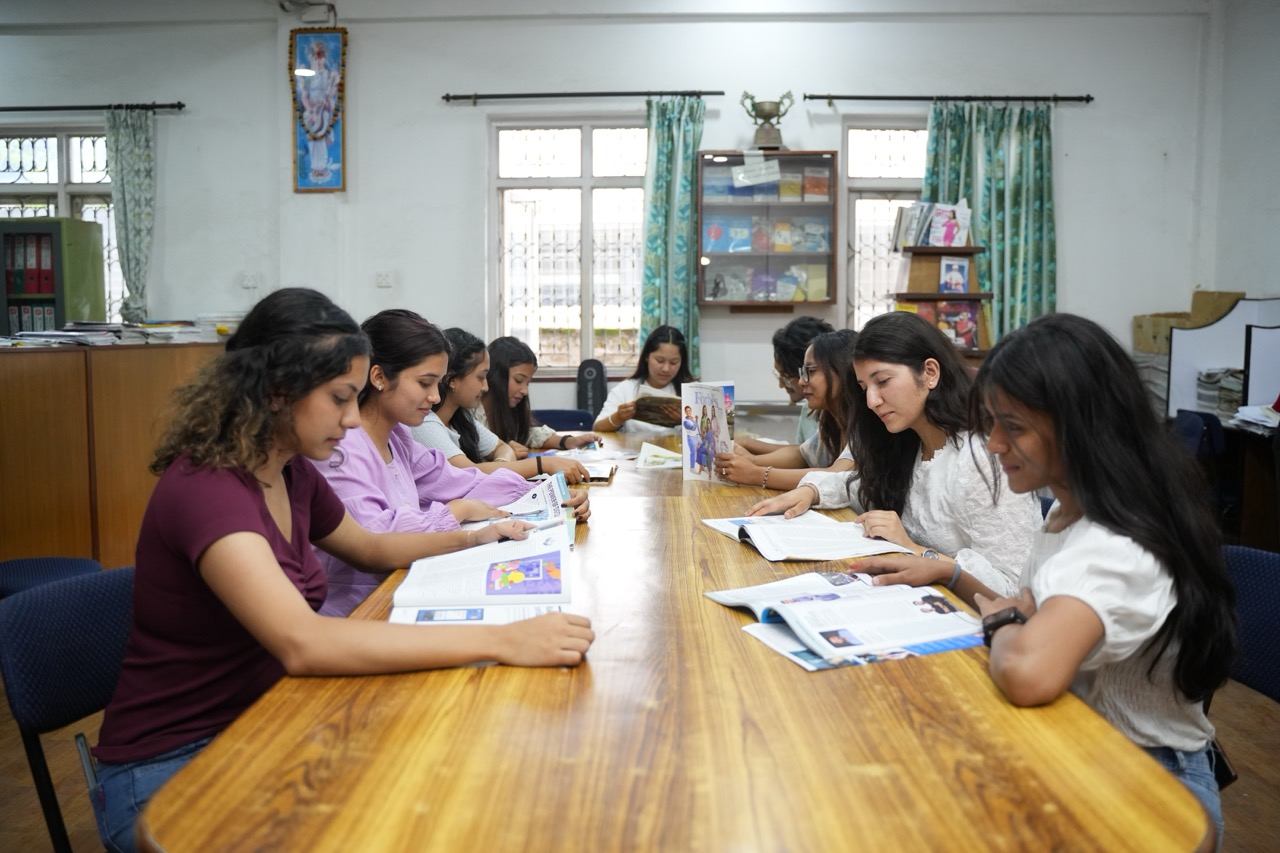
Bachelor of Business Information Systems (BBIS) program is a four-year, comprehensive bachelor degree program, designed by blending the domain knowledge of the information systems and information technology with that of business and management. Such integrated program has been offered to address the demands of rapidly changing information technology (IT) driven business environment.
The program aims to:
- provide a better and broader perspective of the world, society, business, information systems, and life by combining the study of management, information systems and information technology with the study of social sciences and humanities;
- develop a habit of critical and creative thinking and analytical and problem solving abilities;
- improve communicative and presentation skills;
- familiarize students with contemporary concepts, tools and techniques of management;
- deepen the knowledge and sharpen the expertise of students in the functional area of information systems;
- prepare students to serve in finance, IT/IS and other management sectors;
- prepare sensible and responsive citizens with a high degree of professional, social and ethical values; and
- prepare students for higher studies (Masters’ level programs) in the areas of management and information systems.
BBIS is open to Nepali and non-Nepali nationals with:
- A 10+2 or Intermediate or equivalent program of at least two-year duration in any discipline with a minimum of 40 percent in aggregate or CGPA of 1.6 on the scale of 4.0 and minimum 'D+' grade in each subject from a university/board recognized by Kathmandu University; or
- GCE Advanced Level students should have passed minimum three subjects in A Level and one general paper in AS Level with marks/grades requirements as mentioned above; or
- IB Level students should have passed all 6 courses with minimum 4 in each and have at least 28 marks in aggregate; and
- Score of 50 percentile or above in Kathmandu University Undergraduate Management Admission Test (KUUMAT); and
- Score of 50 percentile or above in analytical writing and personal interview after passing KUUMAT with the required score.
Evaluation Method
Student performance is assessed through in-semester and end-semester evaluation. In-semester evaluation is carried out through several criteria such as tests, assignments, presentations and mini-projects by the faculty. End Semester assessment is done through paper-and-pencil test.
The students final grades are awarded as below:
| Grade | A | A- | B+ | B | B- | C+ | C | C- | D | F |
|---|---|---|---|---|---|---|---|---|---|---|
| Grade Point | 4 | 3.7 | 3.3 | 3.0 | 2.7 | 2.3 | 2.0 | 1.7 | 1.0 | 0 |
| Marks | 80-100 | 75-79 | 70-74 | 65-69 | 60-64 | 55-59 | 50-54 | 45-49 | 40-44 | <40 |
Highlights of the Program:
- Kathmandu University (KU) Affiliated Program
- Interdisciplinary Curriculum Combining Business and Information Systems
- Designed to Meet the Needs of the Digital Economy
- Emphasis on Analytical Thinking, Problem Solving, and Decision Making
- Project-Based Learning with Practical Business Applications
- Career Opportunities Across Business, IT, Banking, FinTech, and Consulting
- Strong Foundation for Higher Studies and Professional Growth
- Delivered by Experienced Faculty in a Student-Centered Learning Environment